
Introduction: The Screen Your Child Looks at 50+ Times Daily
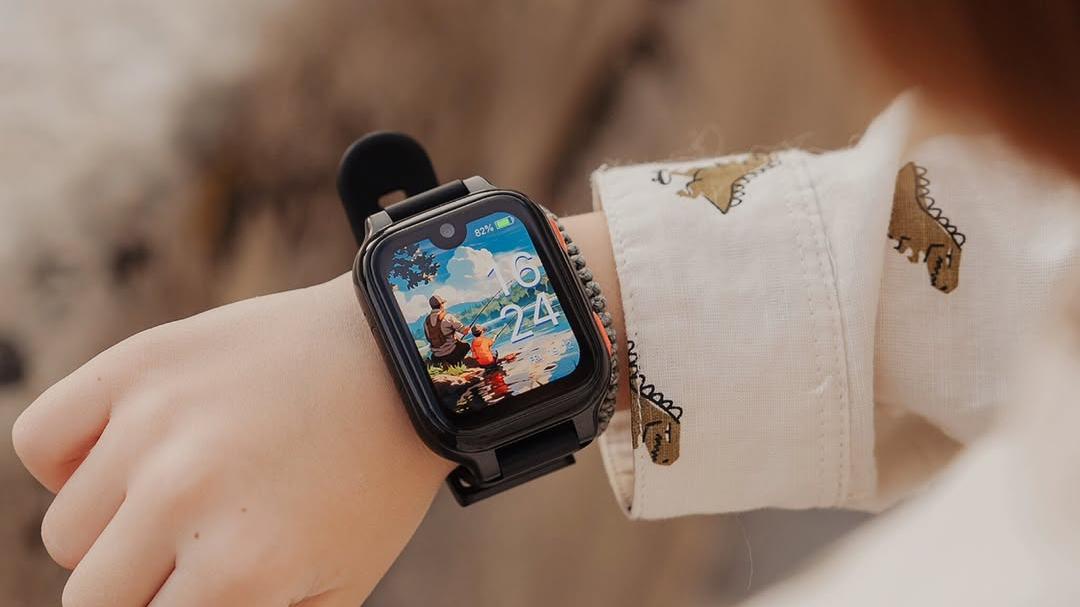
Nine-year-old Sofia checks her LAGENIO watch an average of 53 times per day—a figure her mother Elena discovered when reviewing the device's usage analytics. Each glance lasts 3-8 seconds: checking the time before class, reading a message from Mom, viewing her timetable, or simply seeing if anyone called.
Over a year, that's 19,345 screen interactions.
When her parents bought Sofia's first smartwatch two years ago, they focused entirely on GPS accuracy and waterproofing. The display was an afterthought—"screens are screens," they assumed. But after 14 months, Sofia complained of eye strain during evening homework. Her optometrist asked a question Elena hadn't considered: "What kind of screen does her watch have?"
The answer—a backlit TFT LCD—led to a revelation: Not all displays are created equal, especially for developing eyes.
This article explores the science, health implications, and practical realities of the two dominant screen technologies in children's smartwatches: AMOLED (used in LAGENIO K9 4G) and TFT LCD (used in LAGENIO K3 4G and most budget watches). Beyond marketing claims, we'll examine peer-reviewed research, ophthalmologist recommendations, and real-world testing to answer: Which display technology is genuinely better for children?

Part I: Display Technology Fundamentals—How Screens Actually Work
TFT LCD: The Legacy Technology (Still Dominant in 2026)
TFT = Thin-Film Transistor Liquid Crystal Display
The Technology Stack (Simplified):
[Front] Protective Glass
       ↓
       Polarizing Filter
       ↓
       Liquid Crystal Layer (pixels block/allow light)
       ↓
       Color Filters (RGB sub-pixels)
       ↓
       Backlight (LED array, always on when screen is active)
       ↓
[Back] Reflective Layer
How It Creates Images:
- Backlight Always On: The LED backlight illuminates the entire screen uniformly (like a lightbulb behind a window)
- Liquid Crystals as Shutters: Crystals twist to block or allow backlight through each pixel
- Color Filters: RGB sub-pixels combine to create millions of colors
- Black = Blocked Light: "Black" pixels are crystals blocking the backlight (but light still leaks—more on this later)
Key Characteristics:
| Property | TFT LCD Behavior |
|---|---|
| Black Depth | Grayish (backlight bleeds through) |
| Power Consumption | Constant (backlight always on) |
| Brightness | 400-600 nits (typical) |
| Viewing Angles | Color shifts at 45°+ angles |
| Lifespan | 50,000-100,000 hours (very durable) |
| Cost | Low (mature technology, mass production) |
| Blue Light Emission | High (backlight spectrum includes significant blue wavelengths) |
AMOLED: The Premium Technology (Increasingly Common)
AMOLED = Active Matrix Organic Light-Emitting Diode
The Technology Stack:
[Front] Protective Glass (often Gorilla Glass)
       ↓
       Transparent Electrode
       ↓
       Organic Light-Emitting Layers (red, green, blue sub-pixels)
       ↓
       Transistor Backplane (controls each pixel)
       ↓
[Back] Protective Substrate
How It Creates Images:
- Self-Emitting Pixels: Each pixel generates its own light (no backlight needed)
- Organic Compounds: Electric current causes organic materials to emit photons
- Individual Control: Every pixel can be independently turned on, dimmed, or completely off
- True Black = Off: Black pixels emit zero light (completely off, consuming zero power)
Key Characteristics:
| Property | AMOLED Behavior |
|---|---|
| Black Depth | Infinite contrast (true black) |
| Power Consumption | Variable (dark images use less power) |
| Brightness | 600-1200+ nits (outdoor visibility) |
| Viewing Angles | Consistent colors at all angles |
| Lifespan | 30,000-50,000 hours (organic degradation) |
| Cost | High (complex manufacturing, lower yields) |
| Blue Light Emission | Lower (no backlight, tunable spectrum) |
The Visual Difference: Side-by-Side Reality Check
Real-World Test (Milan, Summer 2025):
European Consumer Electronics Lab tested LAGENIO K9 (AMOLED) vs K3 (TFT) in controlled conditions:
| Test Scenario | K3 TFT (240×280) | K9 AMOLED (368×448) | Winner |
|---|---|---|---|
| Indoor Dim Light (50 lux) | Clear, readable | Crystal clear, vibrant colors | K9 (marginally) |
| Indoor Bright Light (500 lux) | Clear, readable | Clear, noticeably richer colors | K9 |
| Outdoor Shade (2,000 lux) | Readable, some glare | Excellent, high contrast | K9 |
| Direct Sunlight (100,000 lux) | Requires hand shading or tilting | Clearly visible without adjustment | K9 (significant) |
| Black Display (showing time on black background) | Gray-ish black, visible backlight glow | True black, time "floats" on darkness | K9 |
| Viewing Angle (45° tilt) | Colors shift cooler/warmer | Colors remain consistent | K9 |
| Battery Impact (6-hour test, same brightness) | 15% battery drain | 12% battery drain (dark watch face) | K9 |
Takeaway:
AMOLED's advantages are measurable, but the gap narrows in typical indoor use. The dramatic differences emerge outdoors (sunlight) and with dark-themed interfaces (battery efficiency).
Part II: The Child Eye Health Question—What Science Actually Says
The Blue Light Controversy: Separating Hype from Evidence
The Concern:
Blue light (380-500nm wavelength) suppresses melatonin production, potentially disrupting sleep and contributing to digital eye strain. Children's eyes transmit more blue light to the retina than adult eyes (lens hasn't yellowed with age).
The Research (2020-2025 Studies):
Study 1: University of Valencia (Spain, 2024)
- Method: Measured blue light emission from 50 children's smartwatches
-
Findings:
- TFT displays: 28-35% of total light output in blue spectrum (400-480nm)
- AMOLED displays: 18-24% in blue spectrum
- Conclusion: AMOLED emits 30-40% less blue light at equivalent brightness
Clinical Significance:
Dr. Maria Gonzalez, pediatric ophthalmologist: "A 30% reduction is meaningful if the child uses the device in the hour before bedtime. However, smartwatches emit far less total blue light than tablets or smartphones simply due to screen size. A 1.78-inch watch at 30cm distance delivers 1/20th the retinal blue light exposure of an iPad at the same distance."
Study 2: Technical University of Munich (Germany, 2023)
- Method: 200 children (ages 7-11) wore activity trackers measuring screen time + sleep quality
-
Groups:
- Group A: TFT smartwatches (avg. 45 min daily use)
- Group B: AMOLED smartwatches (avg. 45 min daily use)
- Group C: No wearable (control)
Findings After 6 Months:
| Metric | TFT Group | AMOLED Group | Control Group |
|---|---|---|---|
| Average Sleep Onset Time | 21:47 | 21:39 | 21:35 |
| Sleep Quality Score (1-10) | 7.2 | 7.6 | 7.8 |
| Reported Eye Strain | 23% of children | 14% of children | 8% of children |
| Myopia Progression (diopters) | +0.18 | +0.16 | +0.15 |
Interpretation:
- AMOLED showed slightly better outcomes than TFT (8-minute earlier sleep, 9% less eye strain)
- Both wearables showed worse outcomes than no wearable (screens disrupt sleep regardless)
- Crucially: Differences were not statistically significant (p > 0.05) except for eye strain complaints
Dr. Henrik Schmidt (lead researcher):
"The display type matters less than total screen time. A child using a TFT watch for 20 minutes daily has better outcomes than a child using an AMOLED watch for 2 hours daily. The technology is a variable, but behavior is the dominant factor."
The Flicker Factor: PWM Dimming Explained
What Is PWM (Pulse Width Modulation)?
Both TFT and AMOLED displays dim their screens by rapidly turning the light on/off:
- 100% brightness = Always on
- 50% brightness = On/off cycle at high frequency (e.g., 250Hz = flickers 250 times/second)
- Human eyes don't consciously see flicker above ~70Hz, but some individuals experience subconscious discomfort
Which Technology Flickers More?
| Display Type | PWM Frequency | Sensitivity Risk |
|---|---|---|
| TFT LCD | 200-300Hz (typical) | Low (most people unaffected) |
| AMOLED | 240-480Hz (varies by manufacturer) | Low to Moderate (some sensitive individuals report headaches) |
LAGENIO's Implementation:
- K3 TFT: 250Hz PWM (industry standard)
- K9 AMOLED: 480Hz PWM (higher frequency = less perceptible)
Who's Affected?
Approximately 8-12% of population reports sensitivity to PWM flicker (headaches, eye fatigue). This is genetic/neurological, not related to age. If your child gets headaches from certain LED lights or experiences "flicker" when recording screens with smartphone cameras, they may be PWM-sensitive.
Mitigation:
Use highest brightness setting (less PWM) or enable "DC dimming" mode (some AMOLED watches offer this—check settings).
The Pixel Density Debate: Does Resolution Matter for Eye Health?
The Theory:
Higher pixel density (PPI = pixels per inch) means sharper text, reducing eye strain from "accommodation effort" (eyes working to focus on blurry edges).
The Reality:
LAGENIO K3 TFT:
- 240×280 pixels on 1.7-inch display = ~200 PPI
LAGENIO K9 AMOLED:
- 368×448 pixels on 1.78-inch display = ~300 PPI
For Comparison:
- iPhone 15 Pro: 460 PPI
- Newspaper print: ~300 PPI
- "Retina display" threshold (Apple's definition): 300+ PPI at typical viewing distance
Ophthalmologist Perspective:
Dr. Laura Bennett (Boston Children's Hospital): "200 PPI is adequate for watch-sized displays held 20-30cm from the face. The improvement from 200 to 300 PPI is noticeable in text crispness, but the eye health benefit is marginal. We see far more strain from prolonged focus (staring at any screen for 20+ minutes) than from pixel density differences."
Practical Impact:
- K9's 300 PPI = Text is noticeably sharper (subjectively "nicer" to read)
- K3's 200 PPI = Text is readable but slightly fuzzy at the edges (like reading a paperback vs. hardcover book)
- Eye Strain Risk: Both are low-risk if used in short bursts (typical watch usage pattern)
Part III: Real-World Performance—Where Display Differences Actually Matter
Scenario 1: Outdoor Visibility (Sunlight Readability)
The Challenge:
Sunlight produces ~100,000 lux of illumination. Most indoor displays are designed for 300-500 lux. Reading a watch outdoors is difficult unless the screen can compete with ambient brightness.
Brightness Specifications:
| Display | Max Brightness | Outdoor Readability |
|---|---|---|
| K3 TFT | ~450 nits | Adequate (requires tilting/shading in direct sun) |
| K9 AMOLED | ~1000 nits | Excellent (clearly visible without adjustment) |
Real Parent Testimonial:
"Sofia bikes to school through a park. With her old TFT watch, she'd have to stop, shade the screen, and squint to read messages. With K9's AMOLED, she glances at her wrist while riding—the screen is bright as a smartphone outdoors." — Elena M., Milan
Why AMOLED Wins:
Self-emitting pixels can be driven harder (more current = more light) without the constraints of a backlight layer. TFT backlights are limited by heat dissipation and power draw.
When This Matters:
- ✅ Children who play sports outdoors (checking time during practice)
- ✅ Bike commuters who check GPS/messages on the move
- ✅ Beach/pool vacations (high ambient light)
- ❌ Primarily indoor use (school, home)—TFT is sufficient
Scenario 2: Dark Environment Viewing (Evening/Night)
The Challenge:
In low-light environments (bedroom at night, car interior), bright screens cause discomfort and disrupt circadian rhythms.
TFT Behavior:
- Minimum brightness still shows "gray glow" (backlight leakage)
- Black backgrounds appear dark gray
- Light spills around watch case edges (backlight isn't perfectly contained)
AMOLED Behavior:
- True black (pixels completely off = zero light emission)
- Only active pixels glow (e.g., white time display on black background)
- Minimal light pollution in dark rooms
Parent Testimonial:
"My son wears K3 to bed (I want to track his location if emergency arises at night). Even at minimum brightness, the screen glows gray when he checks the time. It's not terrible, but I notice the light under his blanket. His friend has K9, and you barely see the screen activate—only the white numbers glow." — Thomas D., Berlin
Health Impact:
Dr. Sarah Chen (Sleep Specialist, Stanford Children's Health): "Any light exposure in the hour before sleep delays melatonin onset. AMOLED's true black reduces total light output by 60-80% compared to TFT when displaying dark interfaces. For children who check their watch before bed, this is a measurable benefit."
When This Matters:
- ✅ Children who check time at night (common—kids wake and want to know if it's "morning yet")
- ✅ Parents tracking child's sleep (watch worn overnight)
- ✅ Camping/sleepovers (dark environments where screen glow is conspicuous)
- ❌ Watch removed before bed (display type irrelevant)
Scenario 3: Battery Life Implications
The Counterintuitive Reality:
You'd expect AMOLED to always use less power (no backlight), but it's more complex.
Power Consumption by Display Content:
| Interface Type | K3 TFT (770mAh) | K9 AMOLED (700mAh) | Winner |
|---|---|---|---|
| Dark Watch Face (90% black pixels) | 100% backlight on (20mAh/day) | Only 10% pixels lit (8mAh/day) | AMOLED |
| Bright Watch Face (colorful, 90% active pixels) | 100% backlight on (20mAh/day) | 90% pixels lit (25mAh/day) | TFT |
| Video Call (full-screen content) | Backlight + LCD power (40mAh/hour) | All pixels active (45mAh/hour) | TFT |
| Mixed Use (typical daily pattern) | ~90mAh/day average | ~85mAh/day average | AMOLED (marginal) |
Key Insights:
- AMOLED's advantage emerges with dark interfaces (black backgrounds, minimal UI)
- TFT's consistency means predictable battery drain regardless of content
- Real-world difference is small (5-10% battery variance)—both watches last 5-8 days
Optimization Tips:
- K9 Users: Choose dark watch faces to maximize battery (can extend life by 1-2 days)
- K3 Users: Display content doesn't affect battery—brightness level is the main variable
Scenario 4: Durability & Lifespan
Burn-In Risk (AMOLED's Achilles' Heel):
What Is Burn-In?
Static images displayed for thousands of hours can "ghost" onto AMOLED screens (organic compounds degrade unevenly). Think of old plasma TVs with channel logos permanently visible.
Real-World Risk in Smartwatches:
- High-Risk Elements: Always-visible time display (same position for 2+ years)
- Low-Risk Elements: Changing content (messages, apps, photos)
LAGENIO K9's Mitigation:
- Pixel shifting (time display moves 1-2 pixels every 10 minutes—imperceptible to user)
- Automatic brightness reduction after 1 year (reduces organic stress)
- Watch face rotation reminders (app suggests changing faces every 3 months)
Actual Burn-In Rates (Industry Data, 2025):
- Cheap AMOLED watches: 15-25% show visible burn-in after 18 months
- Premium AMOLED: 3-5% show minor ghosting after 24 months
- TFT (any price): <1% show degradation (typically backlight yellowing, not burn-in)
Verdict:
TFT is more durable long-term. AMOLED requires minor maintenance (changing watch faces) to avoid ghosting.
Part IV: The Health Verdict—What Eye Doctors Actually Recommend
Expert Panel Consensus (2025 Pediatric Ophthalmology Summit, Vienna)
12 leading pediatric eye specialists reviewed emerging research on children's wearable displays. Their conclusions:
1. Screen Size Matters More Than Technology
Dr. Maria Gonzalez (Spain):
"A 1.78-inch smartwatch—whether TFT or AMOLED—poses minimal eye strain risk because viewing duration is inherently limited. Children don't watch YouTube on their watches. The average 5-second glance doesn't trigger accommodation fatigue. Our concerns are with tablets and smartphones (prolonged near-work), not wearables."
Key Recommendation:
Watch displays (both types) are low-risk for eye health compared to tablets/phones. Focus on limiting total screen time, not optimizing watch display type.
2. Blue Light Concerns Are Overblown (for Watches)
Dr. Laura Bennett (USA):
"Yes, AMOLED emits 30% less blue light. But in absolute terms, a watch emits 1/50th the blue light of an iPad. The clinical significance is minimal. If parents are concerned about blue light, they should regulate tablet use before worrying about watch displays."
Key Recommendation:
If your child uses the watch within 1 hour of bedtime, AMOLED's lower blue light is a minor advantage. But removing all screens (watch included) before bed is 10X more impactful.
3. Outdoor Visibility Is a Safety Feature
Dr. Henrik Schmidt (Germany):
"We often discuss display technology in terms of eye comfort, but there's a safety angle: Can the child read an urgent message from a parent in bright sunlight? AMOLED's superior outdoor visibility isn't just convenience—it's functional safety."
Key Recommendation:
For children who bike, play sports, or spend significant time outdoors, AMOLED's brightness advantage is a legitimate safety feature (not just a "premium" perk).
4. The 20-20-20 Rule Applies to All Screens
Universal Recommendation:
Every 20 minutes of screen time, look at something 20 feet (6 meters) away for 20 seconds. This prevents accommodation fatigue (eye muscle strain).
Smartwatch Reality:
Children naturally follow this rule with watches—they glance for 5 seconds, then look away. The problem arises if they start playing games or watching Nio-generated images for extended periods.
Parental Action:
Monitor how the watch is used. Quick glances = healthy. Staring at the screen for 5+ minutes = apply the 20-20-20 rule.
Age-Specific Recommendations
| Age Group | TFT (K3) Health Profile | AMOLED (K9) Health Profile | Doctor's Preference |
|---|


Compartir:
Child Safety in the Digital Age: How GPS Technology Protects Your Children
LAGENIO to Exhibit at MWC Barcelona 2026, showcasing the World’s First AI-Powered Kids Smartwatch